

Have you ever wondered why the Bible repeatedly talks about a remnant a small group of people who remain faithful when others turn away?
The word may sound simple, but its biblical meaning carries a powerful message of faithfulness, preservation, hope, restoration, and God’s purpose.
If you are searching for the remnant meaning in the Bible, you may be going through a season where you feel different from the people around you.
You may even have dreamed about a small group, a surviving group of people, or something remaining after destruction.
Biblically, a remnant is not simply what is left over. It can represent people whom God preserves for a purpose.
What Does Remnant Mean in the Bible?
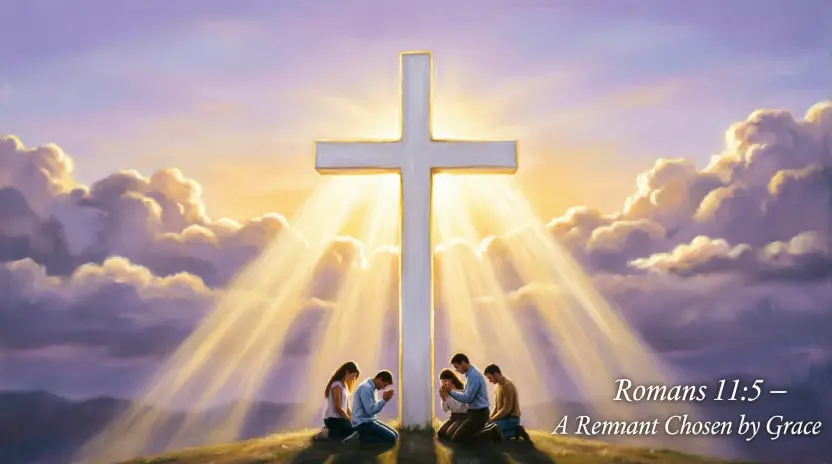
The remnant meaning in the Bible generally refers to a small number of people who remain after a larger group has experienced judgment, destruction, exile, or separation.
The idea appears throughout both the Old and New Testaments.
In many passages, the remnant consists of people who continue trusting God when others have become unfaithful. God preserves them and uses them as part of His continuing purpose.
For example, Isaiah 10:20–22 speaks about a remnant of Israel returning to the Mighty God.
This gives the word an important spiritual idea:
A remnant may be small, but it is not insignificant.
God can preserve a faithful few and accomplish something much greater through them.
Biblical Symbolism of the Remnant
The concept of a remnant carries several important symbols throughout Scripture.
1. Faithfulness in Difficult Times
One of the strongest meanings of a biblical remnant is faithfulness.
A remnant remains when others have fallen away. It represents people who continue seeking God even when obedience becomes difficult.
The story of Elijah illustrates this idea. Elijah believed he was the only faithful person left, but God told him that He had preserved thousands in Israel who had not bowed to Baal (1 Kings 19:18).
This teaches an encouraging lesson:
You may feel alone without actually being alone.
God can be working quietly in people and places you cannot see.
2. Preservation by God
A remnant can symbolize God’s ability to preserve what He intends to use.
Throughout biblical history, God’s people sometimes faced war, exile, persecution, judgment, and tremendous hardship. Yet God continued to preserve a remnant.
This does not mean that believers never experience suffering.
Instead, it shows that hardship cannot automatically cancel God’s purposes.
3. Hope After Destruction
The word remnant can also carry a message of hope after loss.
Something may have been broken, removed, or destroyed, yet something remains.
The prophets often spoke about a remnant returning to God and experiencing restoration.
Therefore, the remnant can symbolize a new beginning after a difficult season.
4. Spiritual Separation
A remnant can also represent separation from ungodliness.
Being part of the remnant is not about believing that you are better than everyone else.
Rather, it can represent choosing faithfulness when the surrounding culture, environment, or even people close to you are moving in another direction.
5. God’s Purpose
A remnant is often connected with God’s continuing plan.
What appears small in human eyes can have enormous significance in God’s hands.
This is one reason the biblical remnant is such a powerful image of spiritual purpose.
7 Spiritual Meanings of Remnant in the Bible

If you keep encountering the word “remnant,” or you are wondering about its spiritual significance, these seven meanings may help you understand the biblical theme.
1. God Can Preserve You Through Difficult Seasons
The remnant can symbolize God’s preservation.
You may have experienced disappointment, rejection, loss, or a season that seemed to take everything away.
Yet the fact that something remains can be meaningful.
The biblical message is not that every difficult experience happens because God is punishing you. Rather, Scripture shows that God can sustain His people even during painful circumstances.
What remains may become the starting point for restoration.
2. You May Be Called to Remain Faithful
The remnant often represents people who refuse to abandon God.
There may be moments when doing what is right feels unpopular or lonely.
You might wonder why your values are different from those around you.
The biblical idea of the remnant reminds us that faithfulness is valuable even when it is not widely celebrated.
3. God Can Use Something Small
A remnant is, by definition, smaller than what existed before.
That can be spiritually significant.
You may look at your resources, influence, opportunities, or circumstances and think they are too small to matter.
But Scripture repeatedly demonstrates that God does not need large numbers to accomplish His purposes.
A small beginning can still become part of something significant.
4. The Remnant Can Represent Restoration
Sometimes the remnant is what survives so that restoration can happen.
This can speak deeply to someone who feels that a part of life has been lost.
Perhaps a relationship changed, an opportunity disappeared, or a season ended unexpectedly.
The spiritual lesson is that an ending does not necessarily mean the end of God’s work.
There can still be something to rebuild.
5. The Remnant Represents Hope
Biblical prophecy often connects the remnant with future hope.
Even when judgment and destruction dominate the surrounding circumstances, Scripture still points toward God’s faithfulness.
This makes the remnant a symbol of hope.
It says, in effect:
“God has not forgotten His purpose.”
6. You May Need to Stand Apart
The remnant can also symbolize spiritual distinction.
Following God sometimes requires making choices that separate you from unhealthy influences.
This does not mean becoming proud, judgmental, or isolated.
Instead, it means developing the courage to remain faithful while still showing love and humility toward others.
7. What Remains Can Have a Purpose
Perhaps the most encouraging meaning is that what remains can still matter.
You may look at your life and focus on what you lost.
The biblical picture of the remnant invites you to consider another question:
What has God preserved?
Sometimes the thing that remains is exactly where your next season begins.
What Does It Mean to Dream About a Remnant?
If you dreamed about a remnant, the meaning depends heavily on the details of the dream.
The Bible does contain many dreams and visions, but Scripture does not teach that every modern dream is automatically a message from God.
Therefore, dream interpretation should be approached prayerfully rather than fearfully.
A dream about a remnant may symbolically point toward themes such as survival, preservation, faithfulness, restoration, separation, or hope.
Your emotions and the circumstances surrounding the dream also matter.
Different Dream Scenarios and Their Possible Meanings
Dreaming That You Are Part of a Remnant
If you dream that you are part of a small group that survives or remains, it may symbolize perseverance.
You could be processing a season where you feel different from others.
Spiritually, the dream may encourage you to remain faithful rather than following the crowd.
It can also reflect your desire to find people who share your values and faith.
Dreaming About a Remnant of People
Seeing a small group of people remaining after a larger group has disappeared may symbolize community and spiritual fellowship.
It could represent the importance of surrounding yourself with people who encourage your relationship with God.
The dream may also remind you that feeling isolated does not necessarily mean you have been forgotten.
Dreaming About a Remnant of Cloth
A piece of remaining cloth may symbolize something that has survived after being cut, damaged, or separated.
Spiritually, this can represent endurance and the possibility of using what remains for something meaningful.
It may also symbolize a season of transformation.
Dreaming About a Remnant After Destruction
If the dream shows destruction followed by something remaining, the imagery can represent hope after hardship.
The destruction itself does not necessarily predict a future disaster.
Instead, it may reflect emotional experiences, major changes, or the ending of an old chapter.
The remaining object or people may represent what you still have to build upon.
Dreaming That You Are Searching for the Remnant
Searching for a remnant can symbolize a desire to discover what is still valuable.
Perhaps you are trying to understand what remains after a major life change.
The dream may encourage you to stop focusing entirely on what disappeared and recognize what has been preserved.
Dreaming About a Faithful Remnant
A dream involving faithful people may symbolize spiritual commitment.
It could be a reminder to examine your own walk with God and ask whether your choices reflect your faith.
The message is less about being part of an exclusive group and more about remaining committed to God’s truth.
Dreaming That You Are the Only One Left
This kind of dream can feel intense.
Biblically, however, it can connect with Elijah’s experience in 1 Kings 19.
Elijah believed he was alone, but God revealed that there were others who remained faithful.
If you have this kind of dream, consider whether you have been feeling spiritually or emotionally isolated.
The message may be an invitation to seek healthy fellowship rather than carrying everything alone.
Bible Verses About the Remnant
Several passages help explain the biblical meaning of a remnant.
Isaiah 10:20–22
Isaiah describes a remnant of Israel returning to the Mighty God.
This passage connects the remnant with returning to God and genuine faith.
Isaiah 11:11
Isaiah speaks of the Lord recovering the remnant of His people.
This highlights God’s power to gather and restore those who remain.
Jeremiah 23:3
God promises to gather the remnant of His flock from different places.
The imagery emphasizes God’s care, gathering, and restoration.
Ezekiel 6:8
God speaks about leaving a remnant who would escape the sword among the nations.
This demonstrates the preservation theme associated with the word.
Micah 5:7–8
Micah describes the remnant of Jacob among the nations.
The passage presents the remnant as something that can have influence and purpose even while being surrounded by others.
Romans 11:5
Paul speaks of a remnant according to God’s gracious choice.
This connects the remnant theme with grace rather than human achievement.
What Is the Spiritual Message of the Remnant?
The deepest spiritual message of the remnant is that God can preserve faith and purpose even when circumstances appear to be falling apart.
You may sometimes look at your life and see everything that has disappeared.
But Scripture repeatedly directs attention toward God’s faithfulness.
What remains may not look impressive.
It may be a small amount of strength, one relationship, a renewed desire to pray, a lesson learned, or simply the decision to keep trusting God.
Yet small things can become important beginnings.
The remnant teaches us not to despise what remains.
What Should You Do After Dreaming About a Remnant?
If you believe your dream may have spiritual significance, don’t immediately assume that it is a prophecy.
Instead, take time to pray and reflect.
1. Pray for Wisdom
Ask God for wisdom and discernment.
James 1:5 teaches that those who lack wisdom can ask God, who gives generously.
2. Examine Your Life
Ask yourself whether the dream connects with a current season of change, loneliness, restoration, or spiritual growth.
Sometimes dreams reflect what is already happening in our hearts.
3. Read Scripture
Compare what you believe the dream means with biblical teaching.
A genuine spiritual interpretation should not contradict Scripture.
4. Look at What Remains
Consider the good things that are still present in your life.
Instead of focusing only on loss, ask:
“What has God preserved, and how can I faithfully use it?”
5. Stay Humble
If you feel that God is calling you to stand apart, don’t let that become pride.
Biblical faithfulness should produce humility, love, obedience, and compassion.
6. Seek Wise Counsel
If a dream is deeply troubling or you believe it carries major spiritual implications, talk with a mature and trustworthy Christian leader who understands Scripture.
Is Being Part of the “Remnant” About Being Better Than Other People?
No.
This is an important distinction.
The biblical remnant is not a reason for spiritual pride or for declaring that everyone outside your group is rejected by God.
The emphasis is on faithfulness to God, His grace, and His purposes.
Romans 11:5 is especially important because Paul describes the remnant as existing according to God’s grace.
So the proper response is humility, not superiority.
Remnant Meaning in the Bible: A Message of Hope
The biblical meaning of remnant is ultimately a message of faithfulness and hope.
God’s people may experience difficult seasons. Communities may change. Things may be lost. Circumstances may become uncertain.
Yet Scripture shows that God is able to preserve a people for His purposes.
If you feel like only a small part of your strength, hope, or faith remains, don’t automatically assume that your story is finished.
Sometimes what remains is the beginning of restoration.
🌿 The remnant may look small, but God can still use it.
FAQs:
1. What does remnant mean spiritually in the Bible?
Spiritually, a remnant can represent people who remain faithful to God during difficult or spiritually challenging times. It can also symbolize preservation, hope, restoration, and God’s continuing purpose.
2. What does the Bible say about God’s remnant?
The Bible contains numerous references to a remnant, especially in the prophetic books. Passages such as Isaiah 10, Isaiah 11, Jeremiah 23, and Romans 11 connect the remnant with God’s preservation, grace, restoration, and faithfulness.
3. What does dreaming about a remnant mean?
Dreaming about a remnant may symbolize survival, preservation, faithfulness, restoration, or something valuable remaining after a difficult season. However, dreams should be interpreted carefully and tested against Scripture rather than automatically considered divine messages.
4. Does remnant mean only a small group of people?
Not always. In the Bible, “remnant” can refer to people who remain, but the broader concept can also involve what survives or is preserved after destruction, judgment, separation, or loss.
5. Does being part of God’s remnant mean I am better than others?
No. The biblical concept of the remnant should produce humility rather than superiority. Scripture connects God’s remnant with His grace and faithfulness, not human pride.
6. What is the main lesson of the remnant in the Bible?
The main lesson is that God can preserve faith, hope, and purpose even through difficult circumstances. What looks small or insignificant can still be valuable in God’s hands.
Final Thoughts:
The remnant meaning in the Bible carries a beautiful reminder: what remains is not necessarily worthless it may still have a purpose.
Perhaps you are in a season where something has been taken away. Maybe you feel like your faith, opportunities, relationships, or strength have been reduced.
Don’t overlook what remains.
The Bible’s message of the remnant reminds us that God can work through small beginnings, preserve those who trust Him, and bring restoration after seasons of difficulty.
So if you have been feeling forgotten, discouraged, or alone, take heart.
A small remnant can still carry a great purpose.
Keep seeking God. Keep walking faithfully. Keep trusting His timing.
What remains in your hands today may become part of what God builds tomorrow. 🙏
Discover more post:
| https://bibledreamz.com/raca-meaning-in-the-bible/ |
| https://bibledreamz.com/noel-meaning-in-bible/ |
| https://bibledreamz.com/meek-meaning-in-the-bible/ |

Freya is a passionate content creator and writer at BibleDreamz (https://bibledreamz.com/), where she shares inspiring, thoughtful, and meaningful content that connects deeply with readers around the world. With 5 years of professional writing experience, she has developed a strong voice in creating engaging, motivational, and faith-inspired articles.