
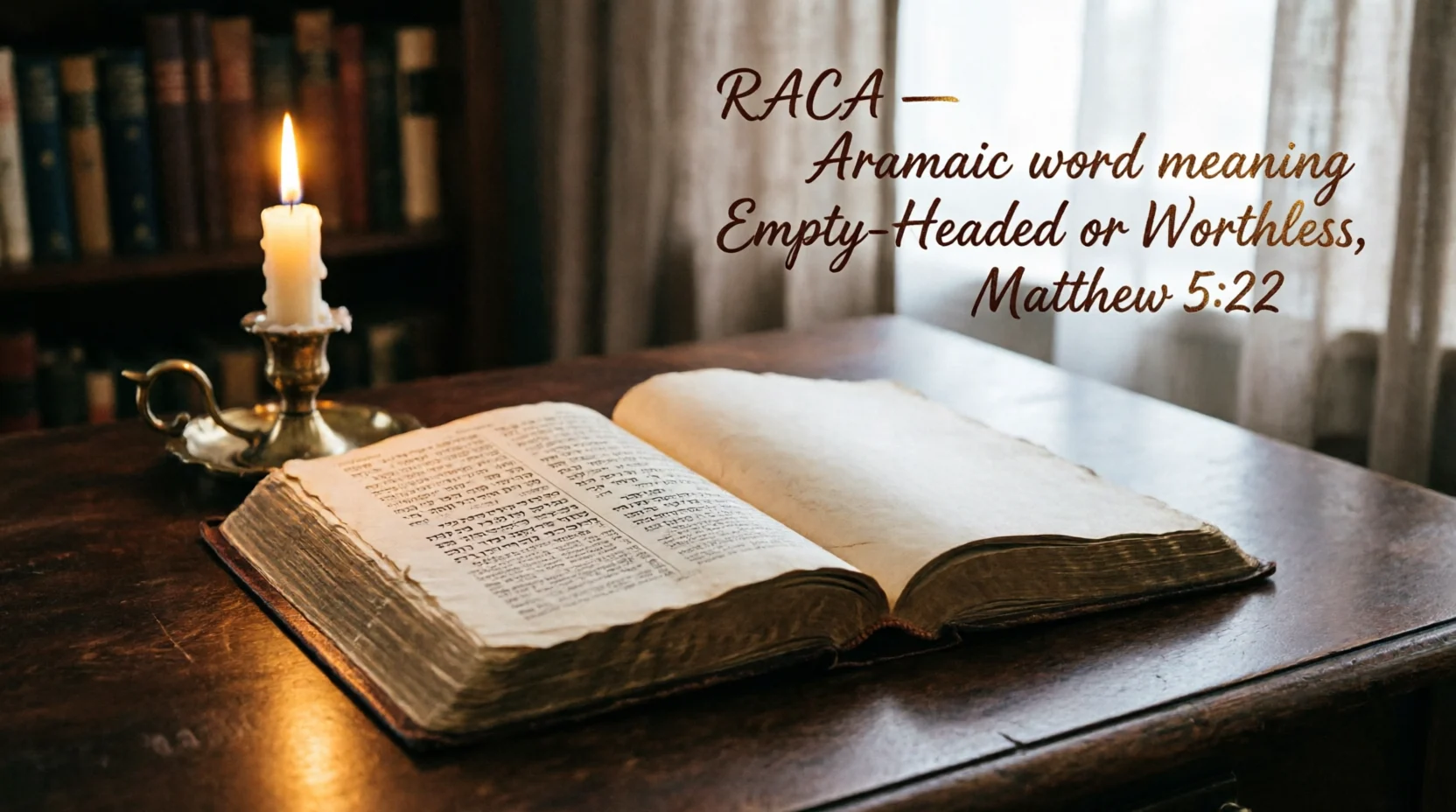
The phrase “raca meaning in the Bible” may seem like a simple Bible-study question, but this little word carries a serious spiritual message.
Jesus used it while teaching about anger, contempt, and the way we treat other people.
If you have recently come across the word Raca, seen it in a dream, heard it repeatedly, or felt spiritually drawn to its meaning, you may be wondering what God could be showing you.
The biblical context gives us an important place to begin.
What Does Raca Mean in the Bible?

Raca appears in Matthew 5:22, where Jesus teaches about anger and insults:
“But I say to you that everyone who is angry with his brother will be liable to judgment…” — Matthew 5:22
The word Raca comes from an Aramaic expression associated with contempt, worthlessness, emptiness, or foolishness. It was a derogatory expression used to insult another person.
Jesus was not merely discussing the use of one particular word. He was addressing the condition of the heart behind hateful or contemptuous speech.
The deeper message is that sin is not limited to physical actions. What happens in our hearts, attitudes, thoughts, and words also matters before God.
Biblical Symbolism of Raca
The biblical symbolism of Raca centers around contempt and the devaluing of another person.
When someone calls another person worthless, foolish, or beneath them, they are treating a person created in God’s image as though that person has little or no value.
This is why the teaching of Jesus is so powerful. He takes the issue deeper than outward behavior and points toward the heart.
Raca Represents Contempt
Raca can symbolize an attitude that says, “You are beneath me.”
Such an attitude can grow from anger, pride, jealousy, resentment, bitterness, or unforgiveness.
Raca Can Represent Harmful Words
Words can wound deeply. A person may recover from a physical injury while carrying the memory of cruel words for years.
The Bible repeatedly encourages believers to use speech that builds others up rather than tears them down.
Raca Can Point to Pride
There is also a warning against looking down on others.
When pride convinces someone that they are better, wiser, or more deserving than everyone else, contempt can easily follow.
Spiritual Meaning of Raca in the Bible

If you are studying the spiritual meaning of this biblical word, several important lessons stand out.
1. God Cares About the Condition of Your Heart ❤️
One of the strongest lessons connected with Raca is that God looks beyond outward behavior.
A person may appear calm on the outside while carrying deep anger or hatred inside.
Jesus teaches that God is concerned with what is happening within us, not simply what other people can see.
2. Be Careful How You Value Other People
Raca reminds us that every human being has dignity.
Even when someone has treated you badly, Scripture calls you to avoid allowing hatred and contempt to control your heart.
This does not mean ignoring wrongdoing. It means refusing to let another person’s actions turn your heart into a place of bitterness.
3. Words Have Spiritual Weight
The meaning of Raca also highlights the power of speech.
A careless insult may take only a few seconds to say, but its emotional effect can remain much longer.
Biblical wisdom encourages believers to speak truth with love and to use their words for encouragement, correction, healing, and restoration.
4. Anger Needs to Be Handled Before It Grows
Anger itself can be an important emotional response, but uncontrolled anger can become destructive.
Jesus connects anger with the danger of contempt because bitterness can gradually change how we see another person.
A temporary disagreement can become hatred if it is continually fed.
5. Forgiveness Protects the Heart
Raca can serve as a reminder to examine unresolved resentment.
Sometimes the greatest spiritual battle is not what someone else is doing but what their actions are producing inside us.
Forgiveness does not mean saying that harmful behavior was acceptable. It means surrendering the desire for personal revenge and allowing God to deal with the matter.
6. Humility Is the Opposite of Contempt
Where contempt says, “You are worthless,” humility remembers that every person stands in need of God’s grace.
Humility helps us correct others without humiliating them and disagree without treating them as enemies.
7. God Wants Reconciliation
The larger context of Matthew 5 emphasizes reconciliation.
Jesus teaches that relationships matter. When conflict exists, believers should take seriously the responsibility to pursue peace where possible.
Sometimes reconciliation requires an honest conversation, an apology, a boundary, or simply releasing bitterness before God.
Different Situations and the Meaning of Raca
The meaning of Raca can become even clearer when we consider different situations.
If You Hear the Word “Raca” in a Dream
If you dream about the word Raca, do not automatically assume the dream is a direct prophecy from God.
Dreams can come from many sources, including personal experiences, emotions, memories, fears, and spiritual reflection.
However, biblically, the word could prompt you to examine your relationships, speech, anger, and attitudes toward others.
Ask yourself:
- Am I carrying resentment?
- Have I been treating someone with contempt?
- Have someone’s words deeply wounded me?
- Do I need to forgive someone?
- Do I need to apologize for something I said?
The important lesson is not simply the appearance of the word but what it causes you to examine spiritually.
If Someone Calls You “Raca”
If someone treats you as worthless or speaks to you with contempt, remember that another person’s insult does not determine your value.
Your worth does not come from human approval.
The biblical message points toward the value God places on human life and the dignity of people created in His image.
If You Have Called Someone Raca
This can be an opportunity for honest self-examination.
If your words have wounded someone, consider whether an apology is appropriate.
Repentance is more than feeling guilty. It involves turning away from the wrong attitude and seeking a better way forward.
If You Keep Thinking About the Word Raca
Repeatedly thinking about a biblical word may simply mean that something about it has caught your attention.
Rather than becoming fearful, use the opportunity for Bible study and prayer.
Consider whether the message of Jesus about anger, contempt, reconciliation, and speech applies to something happening in your life.
Bible Verses Related to the Meaning of Raca
Several passages help explain the broader biblical message behind Raca.
Matthew 5:22
This is the primary passage where Jesus uses the word Raca. The verse connects anger and contempt with accountability before God.
Matthew 5:23–24
Immediately afterward, Jesus teaches about reconciliation with a brother or sister.
This reinforces the importance of dealing with broken relationships rather than allowing conflict to remain unresolved.
Ephesians 4:29
Paul teaches believers to avoid corrupting speech and instead use words that are helpful for building others up.
This is closely connected to the lesson behind Raca: our words should give grace rather than destruction.
Proverbs 15:1
Proverbs teaches that a gentle answer can turn away wrath.
The verse offers a practical response to conflict: harshness often intensifies anger, while wisdom can calm it.
James 1:19–20
James encourages believers to be quick to hear, slow to speak, and slow to anger.
Human anger, he explains, does not produce the righteousness God desires.
What Is the Spiritual Message Behind Raca?
The deeper spiritual message is simple but challenging:
Do not allow anger to turn another person into an object of contempt in your heart.
God calls His people to truth, righteousness, mercy, humility, and love.
You can disagree with someone without despising them.
You can establish boundaries without hatred.
You can confront wrongdoing without destroying another person’s dignity.
And you can walk away from an unhealthy relationship without filling your heart with revenge.
This is where the meaning of Raca becomes personally important.
Jesus was not merely correcting vocabulary. He was confronting a heart posture.
What Should You Do After Encountering the Word Raca?
If this word has recently caught your attention, take a quiet moment to reflect.
1. Read Matthew 5:21–24
Do not study Matthew 5:22 in isolation. Read the surrounding passage to understand Jesus’ complete teaching.
2. Examine Your Heart
Ask God to reveal anger, bitterness, pride, resentment, or contempt that you may have overlooked.
3. Watch Your Words
Before speaking during conflict, pause.
Ask yourself whether your words will bring wisdom and healing or simply cause another wound.
4. Consider Reconciliation
If there is a relationship that needs attention, prayerfully consider whether you should initiate a peaceful conversation.
Reconciliation is not always possible or safe, but where appropriate, pursuing peace can be spiritually meaningful.
5. Practice Forgiveness
Give your pain to God.
Forgiveness may take time, especially after serious hurt, but you can begin by surrendering the desire to retaliate.
6. Choose Humility
Remember that everyone needs God’s mercy.
Humility does not make you weak. It helps you respond to conflict without becoming controlled by pride.
FAQs:
What does Raca mean in the Bible?
Raca is an insulting Aramaic expression used in Matthew 5:22. It conveys contempt toward another person and is commonly understood in the sense of calling someone worthless, empty-headed, or foolish.
Is Raca a curse word?
Raca is best understood as a derogatory insult rather than simply a modern curse word. Jesus used it while teaching about anger, contempt, and the seriousness of harmful attitudes and speech.
Where does Raca appear in the Bible?
The word Raca appears specifically in Matthew 5:22 in the New Testament.
What does Raca mean spiritually?
Spiritually, Raca can remind us of the dangers of anger, contempt, pride, hateful speech, and devaluing others. It encourages believers to examine their hearts and pursue forgiveness, humility, and reconciliation.
What does it mean if I dream about Raca?
A dream involving Raca should not automatically be interpreted as a divine message. However, the biblical meaning of the word can provide a useful point for reflection, particularly concerning anger, conflict, resentment, speech, and relationships.
Is Raca connected to unforgiveness?
It can be relevant to unforgiveness because persistent resentment may produce contempt toward another person. The biblical response is to seek God’s help in dealing with anger and to pursue forgiveness and peace where appropriate.
Final Thoughts:
The raca meaning in the Bible is much deeper than the definition of an ancient insult.
Jesus used this word while revealing something important about the human heart: how we treat people in our thoughts and words matters to God.
Anger can become contempt. Contempt can become bitterness. And bitterness can slowly damage both relationships and the heart that carries it.
If Raca has caught your attention through Bible study, a conversation, or even a dream, let it become an invitation to examine your heart rather than a reason to become afraid.
Ask God for wisdom, humility, self-control, and a heart that can forgive.
You may not be able to control how others speak to you, but with God’s help, you can choose what comes out of your own mouth and what you allow to remain in your heart.
Discover more post:
| https://bibledreamz.com/supplication-meaning-in-the-bible/ |
| https://bibledreamz.com/conviction-meaning-in-the-bible/ |
| https://bibledreamz.com/countenance-bible-meaning/ |

Freya is a passionate content creator and writer at BibleDreamz (https://bibledreamz.com/), where she shares inspiring, thoughtful, and meaningful content that connects deeply with readers around the world. With 5 years of professional writing experience, she has developed a strong voice in creating engaging, motivational, and faith-inspired articles.
2 thoughts on “Raca Meaning in the Bible: The Powerful Warning Behind”